About the performance
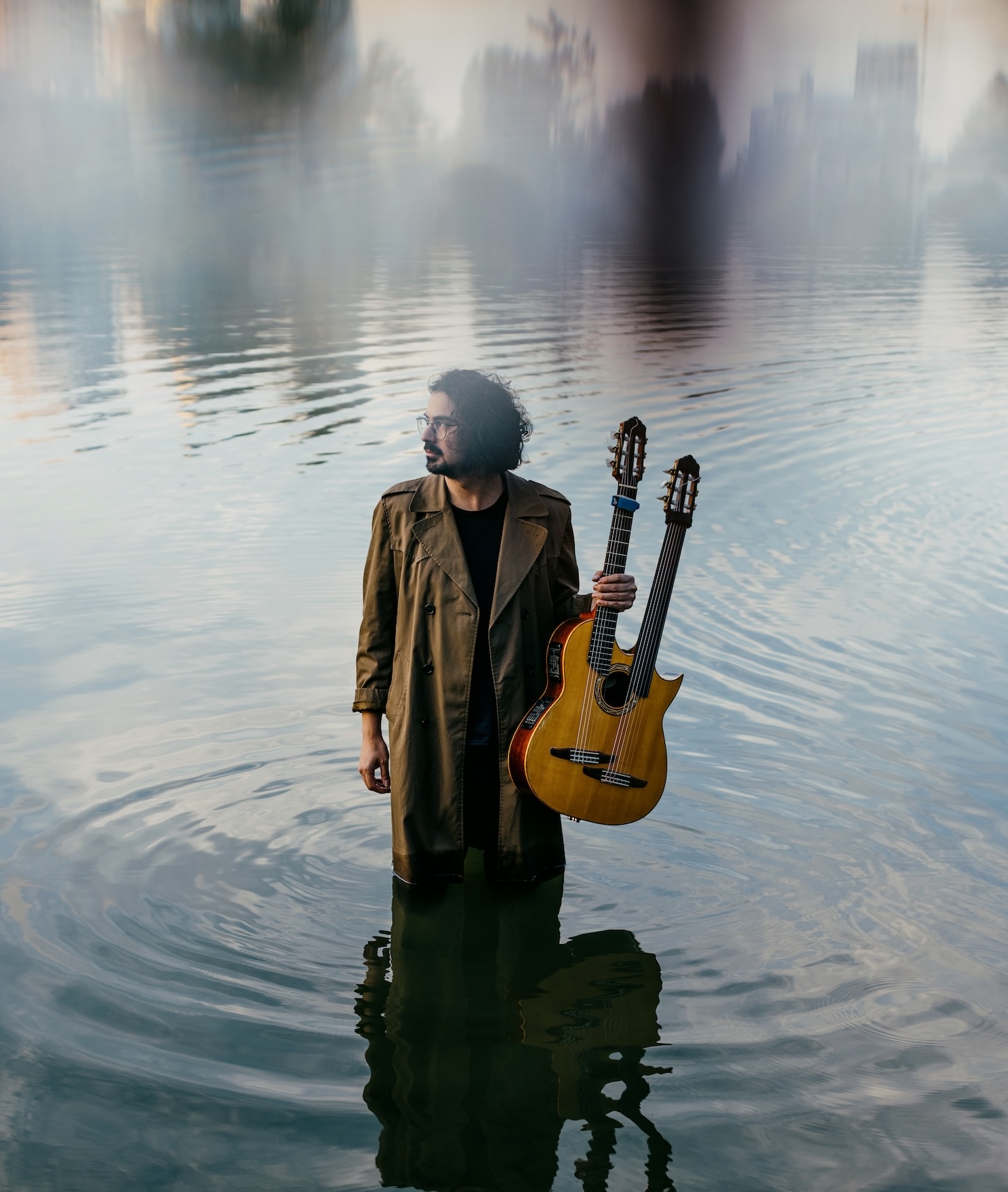
Vienna-based guitarist and composer Mahan Mirarab presents his new solo album for fretless guitar and guitar, releasing on May 15 on ACT Music. Blending Iranian musical traditions with contemporary jazz, European chamber textures, and experimental sound, Mirarab crafts music shaped by migration, memory, and spacious groove.
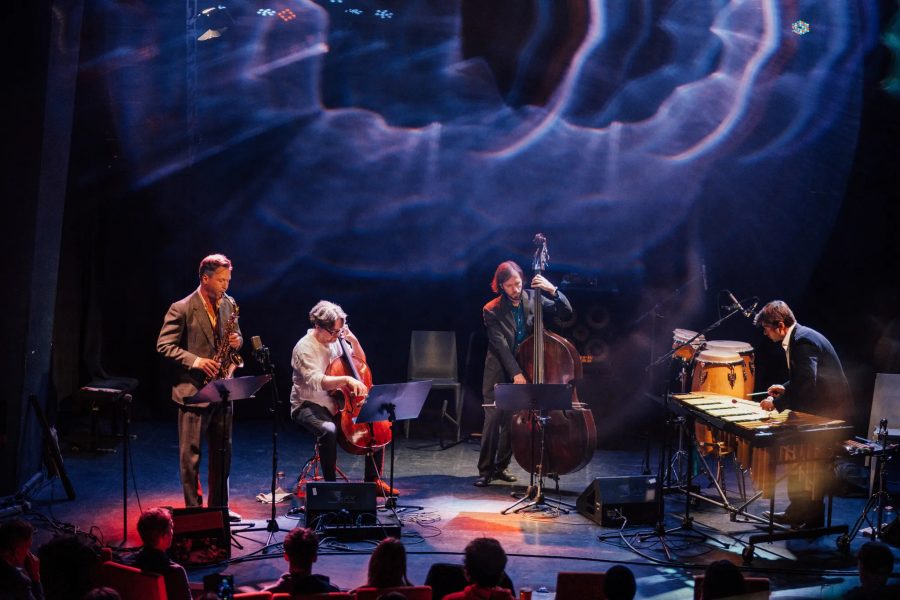
The album features guest artists Lars Danielsson, Kian Soltani, and Golnar Shahyar. For the London concert, Mirarab is joined by acclaimed Austrian percussionist Bernhard Schimpelsberger, known for his innovative rhythmic language rooted in Indian classical tradition and global collaborations.
An intimate and dynamic night of boundary-crossing sound and deep rhythm.
About the artist
Mahan Mirarab is a musician, composer, and educator based in Vienna. He teaches at the Anton Bruckner Private University in Linz and the University of Music and Performing Arts Vienna(MDW). Beyond his academic work, he has written and arranged music for Opera Roma Baron (Vienna Straussfest), Beyond the Roots Orchestra in Cologne, Female Voices of Iran Orchestra, Impossible Stage in Berkeley, California, and the NAWA Orchestra, among others.
He has released six albums and produced music for artists such as Alim Qasimov, Sakina Teyna, and Basma Jabr. His collaborations include projects with the NDR Bigband, Tonkünstler Orchester, Vision String Quartet, Aynur Dogan, and Anthony Braxton, and he has worked with leading record labels including ACT, ECM, and Warner Classics. Rooted in Tehran and based in Vienna, Mirarab’s multi-neck guitar speaks an honest and intimate language—one that transcends words, weaving together stories of migration, memory, and belonging. His music brings together European chamber textures and the fluidity of contemporary jazz, opening new pathways into the heart of Iranian classical traditions. These are not mere fusions but reimaginings: soundscapes where heritage and innovation move freely and reshape one another.
Mirarab belongs to a generation of young migrant artists in Europe who are redefining the borders of sound. With a commitment to dialogue, diversity, and collective creativity, he seeks to craft new narratives around Middle Eastern cultures and jazz. His approach results in a musical language that is both intricate and disarmingly accessible—inviting listeners to think deeply, feel openly, and move with the pulse of the music. As a composer and arranger, Mirarab draws from a rich and expansive musical vocabulary. His rhythmic and harmonic language reflects journeys across jazz, experimental and electronic music, acoustic traditions, and the worlds of film, dance, and theatre. His work avoids cliché; instead, it expands the possibilities of how traditions can meet, challenge, and transform one another.
In Mirarab’s music, tradition is not preserved—it is reborn. The interplay of European chamber music and West Asian art music elements evokes reflection as much as movement. His music is dynamic and spacious, leaving room for breath and imagination, yet it can groove and dance with unmistakable energy. It can descend into darkness and rise suddenly into brightness and joy. His compositions draw on lived experience, shaping a sound world that spans an unusually wide emotional range.“Music can be played softly and still groove,” he notes. “For me, silence defines the notes I play.” A restless and versatile spirit, he moves fluidly between European, Iranian, Arabic, and Kurdish classical music.
His collaborations span continents: from the Vision String Quartet, Tonkünstler Orchester, and Berlin Metropolitan Orchestra to the NDR Big band and Anthony Braxton Orchestra; from Kurdish music with Aynur Dogan and Sakina Teyna to Azerbaijani and Turkish traditions with Alim Qasimov and Erkan Ogur; and to Iranian and Arabic classical forms with artists such as Golnar Shahyar, Misagh Joolaee, and Kinan Azmeh.